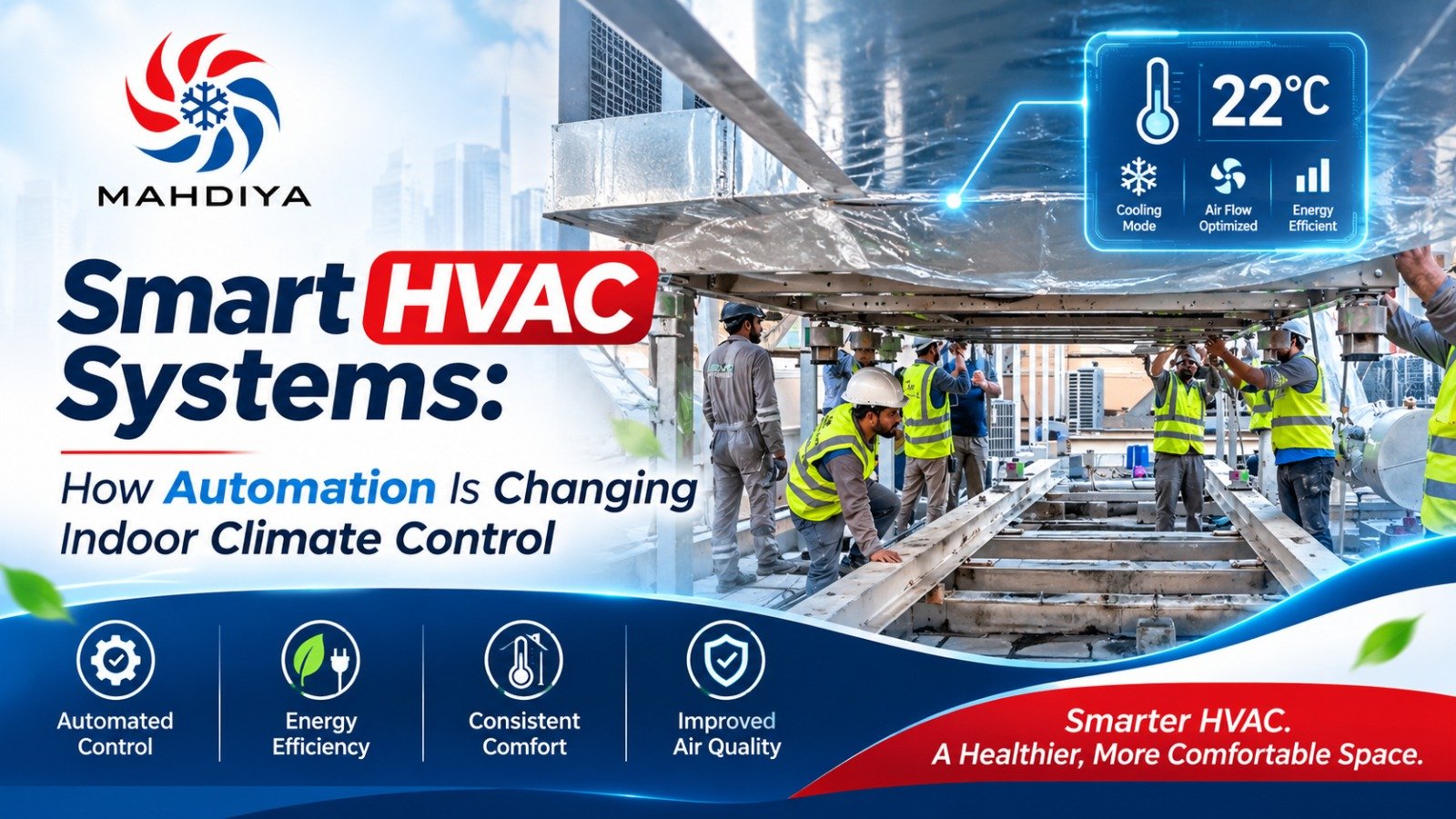
Ten years ago, “smart” air conditioning meant a timer on the wall. Today a thermostat can learn when you leave for work, a sensor can warn you about a struggling compressor before it fails, and a building management system can balance hundreds of units from one screen. In a city where cooling runs almost all year, that shift is not a gadget story. It is a cost, comfort and reliability story. Here is what the data actually says, without the hype.
Why Cooling Automation Matters So Much in the UAE
Air conditioning accounts for as much as 70 percent of electricity consumption in the UAE, according to reporting in The National. The US International Trade Administration puts cooling at roughly 60 to 70 percent of peak summer electricity load, with HVAC representing about 40 percent of total building energy demand. In residential buildings, a February 2026 Khaleej Times report notes that HVAC typically represents about half of energy use, partly because systems were oversized, poorly controlled or have grown inefficient over time.
Oversizing is a real issue too. Abu Dhabi’s Department of Energy says UAE AC systems are often oversized by 25 to 35 percent. When the problem is that large, even modest improvements in control add up quickly.
Smart Thermostats: Small Device, Real Savings
A smart thermostat does three simple things well: it follows a schedule you do not have to think about, it notices when nobody is home, and it learns your habits. The reported savings are meaningful, though not magical. Google says independent studies found its Nest thermostats saved an average of 12 percent on heating and 15 percent on cooling. A Resideo study of Honeywell Home thermostats found savings of 8 to 16 percent for households that used scheduling often, and ecobee claims up to 26 percent against a constant 72°F setting.
Two honest caveats. These are mostly US studies, many published by manufacturers, so Dubai results will vary with insulation, glazing and habits. And a thermostat controls when your AC runs, not how healthy it is. A tired compressor with a clever thermostat is still a tired compressor.
Automated Temperature Control Beyond the Thermostat
The next layer is zoning and sensors. Instead of cooling a whole villa to one number, automated systems adjust rooms separately, ease off in empty spaces and raise output ahead of peak afternoon heat. For offices and shops, occupancy sensors and schedules stop the system from cooling a closed unit overnight. The goal is not colder air, it is the right air in the right place at the right time, which also means fewer hard starts and less wear on equipment.
Remote Monitoring: Catching Problems Before They Become Breakdowns
Most AC maintenance is still reactive. Daikin’s own engineers note that when something fails, detecting it, alerting a team and diagnosing the cause all take time, and that HVAC makes up around 40 percent of energy use in a typical commercial facility. Remote monitoring changes the order of events. Sensors track temperatures, pressures and electrical draw, and software flags drift before the unit stops.
Vendor analyses in 2026 describe this for compressors specifically, with rising current draw and shifting vibration patterns appearing weeks before failure. Treat the exact lead times as marketing estimates, but the logic is sound. If an alert says your compressor is working harder than usual, that is the cheapest moment to book AC compressor repair Dubai services, rather than waiting for a weekend breakdown in August.
Building Management Systems: The Control Room for Larger Properties
A building management system, or BMS, links chillers, air handlers, fans and sensors into one dashboard. A November 2025 ACEEE brief says such systems typically reduce building energy use by 10 to 25 percent. Schneider Electric modeling suggests adding AI on top of a BMS can add 7.2 to 12.7 percent in savings beyond conventional digital controls, and up to 22 percent versus traditional controls. That is vendor modeling, and an academic review in 2025 points out that real deployments usually land in the single digit to low double digit range, with bigger numbers appearing mainly in simulations.
Dubai is already moving this way. Etihad ESCO, a DEWA subsidiary, is tasked with retrofitting 30,000 buildings by 2030. On its Dubai Airports project, which upgraded lighting, water fixtures and cooling controls, it forecast savings of at least 29 percent and reports having achieved 34 percent.
Smart Systems Still Need Skilled Hands
Automation tells you what is wrong. It cannot fix it. A compressor is the heart of an AC system, and it still wears out through heat, electrical stress, low refrigerant and plain age. A smart system can reduce unnecessary cycling and warn you early, but when the alert says the compressor is failing, someone has to diagnose it properly.
That is when quality Compressor repair Dubai work matters. A good technician will confirm whether the problem is truly the compressor or a symptom elsewhere, such as a restricted airflow, a refrigerant leak or a failing capacitor, before recommending repair or replacement. Smart data makes that diagnosis faster, but experience still makes it right.
Choosing the Right Partner
Technology is only as useful as the team behind it. When you compare providers, ask whether they can read your system’s alerts, whether they test before replacing parts, what warranty covers parts and labor, and whether quotes are itemised in writing. If you are searching for the Best compressor repair company in Dubai, look for clear answers to those questions rather than the loudest advertising. At Mahdiya, we believe a good repair starts with an honest diagnosis, and we are happy to explain what the data from a smart system means before any work begins.
Final Thoughts
Smart thermostats, automated controls, remote monitoring and building management systems are making cooling cheaper to run and easier to manage. They work best when paired with proper sizing, regular servicing and skilled repair. The smartest AC system is not the one with the most features. It is the one that is understood, monitored and maintained by people who know what they are looking at.
Frequently Asked Questions
Do smart thermostats really save money on cooling?
Studies reported by manufacturers show average cooling savings of around 15 percent for Nest users and 8 to 16 percent in a Honeywell Home study. Results depend on your home, climate and habits, so treat these as guides, not guarantees.
Can a smart thermostat fix a failing AC?
No. It controls scheduling and temperature, but it cannot repair mechanical or electrical faults. A weak compressor, low refrigerant or a faulty part still needs a technician.
What is a building management system?
A BMS connects cooling equipment, sensors and controls into one platform so a facility can monitor and adjust everything centrally. ACEEE says such systems typically cut building energy use by 10 to 25 percent.
Can remote monitoring prevent AC breakdowns?
It can help by spotting warning signs such as unusual electrical draw or temperature drift early, so repairs can be scheduled before a failure. It reduces surprises but does not remove the need for regular servicing.
Is smart HVAC worth it for a small shop or villa?
Often yes for a smart thermostat and basic scheduling, since the cost is modest and savings are measurable. Larger systems and full BMS upgrades make more sense for bigger properties, ideally after an energy audit.